Google and Anthropic AI Tools Speed Up the Quantum Threat
Recent breakthroughs by Google and Anthropic show how AI is accelerating both quantum computing capabilities and the discovery of cryptographic vulnerabilities.
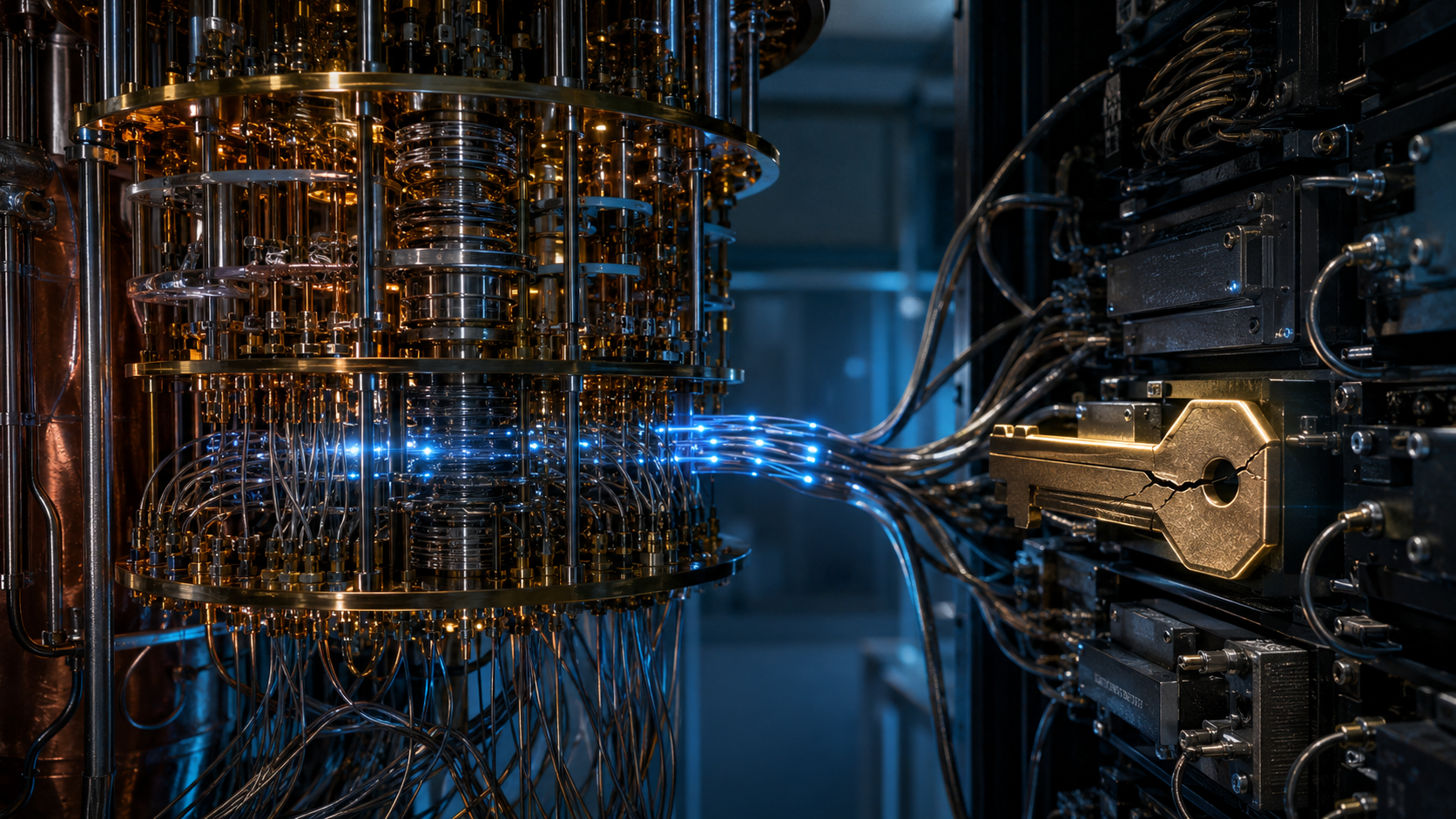
AI is rapidly compressing the timeline for quantum computing development, threatening to render current encryption standards obsolete faster than expected. In July, Google Quantum AI demonstrated an AI system that stabilizes quantum hardware during operation, making it 3.5 times more stable under disruption and cutting post-calibration errors by 20 percent. Furthermore, Google researchers calculated in March that Shor's algorithm could break elliptic-curve cryptography using fewer than 500,000 physical qubits, representing a 20-fold reduction from previous estimates.
This acceleration is not limited to hardware. On the collaborative platform ECDSA.fail, researchers and AI agents optimized quantum attack circuits, surpassing Google's benchmark within days to achieve a 47.5 percent efficiency gain by late June. Meanwhile, AI is also being deployed defensively. In July, Anthropic's Claude model identified a significant vulnerability in HAWK, a post-quantum signature candidate that had already cleared two rounds of human analysis, allowing researchers to address the flaw before deployment.
For security practitioners, these rapid shifts mean that traditional cryptographic transition timelines are dangerously slow. While some tech giants have moved quickly—NIST finalized its first post-quantum standards in 2024, Cloudflare reports over 65 percent of its human traffic uses post-quantum encryption, and Apple and Signal have updated their protocols—decentralized networks face severe coordination bottlenecks. Blockchains must coordinate wallets, exchanges, and validators to adopt larger post-quantum signatures, which demand more storage and network capacity.
To avoid a sudden security crisis, practitioners must audit their systems for vulnerable cryptography and test post-quantum alternatives under live network conditions. Because decentralized governance and hardware updates can take years to implement, security teams must establish migration pathways now, before a sudden quantum breakthrough forces an emergency response.
This is our own summary of reporting by Unite.AI